





Castro
Located in the heart of Salento, on the Adriatic coast, between Otranto and Santa Maria di Leuca, the seaside village of Castro isn’t one of those places that immediately captivates you. First with the sea, then with the views, then with that sense of peace that comes over you when you stop rushing and simply start looking around. It’s one of those places that make no noise, but that once you leave, you miss it more than you thought.
If you love seaside villages, transparent water, cliffs overlooking the sea, sea caves, and authentic places, not built to impress, then Castro is the right place for you.
It’s a perfect destination if you want to slow down, wake up without rushing, eat well, stroll along the seafront, and watch the sunset in peace.

Castro Superiore: the charm of the old town
The first thing to do upon arrival is climb up to Castro Superiore, the old town. Here, time seems to have stood still. Stone houses, narrow alleys, flower-filled balconies, and views that make you stop every ten steps to gaze at the sea.
Walking through Castro Superiore is easy; you don’t need a map. In fact, the beauty lies in getting lost. Every corner offers a different view, every little square has something to tell. It’s one of those places where it’s natural to lower your voice, as if silence were part of the experience.
History
Castro isn’t just beautiful, it’s also ancient. Its name derives from Castrum Minervae, and according to tradition, an important sanctuary dedicated to the goddess Minerva was located here. Legend has it that Aeneas, during his voyage, landed on these very shores, struck by a promontory topped by a temple.
Beyond the myth, Castro was truly a center of great importance in the Messapian, Greek, and Roman eras. Its strategic position made it a key point for trade and for the defense of the territory. Strolling through the village, this historical stratification is clearly evident: Castro is a place that has witnessed the passage of peoples, cultures, and civilizations, leaving traces still visible today.
The Aragonese Castle and the historic heart of the town
The symbol of Castro Superiore is undoubtedly the Aragonese Castle, which dominates the village and the sea below. Built and remodeled over the centuries, the castle recounts the town’s defensive history and offers one of the most beautiful views of the entire coast.
Today, the castle houses exhibition spaces and the Archaeological Museum, where you can discover artifacts from prehistory to the classical age. Even if you’re not an archaeology enthusiast, it’s worth a visit to better understand Castro’s historical importance and its deep connection to the ancient world.
Castro Marina
Descending further down, the landscape changes. Castro Marina is livelier, more summery, more connected to life by the sea. Here you’ll find the port, restaurants, lidos, and platforms on the rocks. Don’t expect long sandy beaches: the sea around Castro is rocky, deep, and incredibly clear.
And that’s precisely its charm. The water is so clear that you can often just look out from the rocks to see the seabed. It’s the perfect place for swimming, snorkeling, or simply being lulled by the sea.
Castro’s small port is one of the most picturesque spots in the town. By day, it’s the starting point for boat excursions; by evening, it becomes a lively yet never chaotic space, where you can stroll, stop for a bite to eat, or simply watch the boats return.

Sea caves
Among the most popular boat trips are those that take you to sea caves, true natural jewels sculpted by water and time. The most famous is undoubtedly the Zinzulusa Cave, one of the most evocative caves in all of Puglia. Entering it is an almost surreal experience: stalactites, stalagmites, plays of light, and profound silence. The name derives from “zinzuli,” meaning rags, due to the rock formations that hang like cloth.
Next to the Zinzulusa are many other caves, such as the Blue Cave, famous for the incredible color of its water, or the Palombara Cave. A boat tour along this coast is one of the most beautiful things to do in Castro, especially on calm days.
Eating in Castro: seafood flavors and Salento traditions
To round out the city’s tourist offerings, we offer a wide selection of traditional dishes waiting to be discovered! In the restaurants and trattorias along the marina and in the village, you’ll find simple yet authentic dishes: raw seafood, seafood pasta, grilled fish, but also Salento specialties like orecchiette, seasonal vegetables, and traditional desserts.
Our advice is to take your time: here, meals are a moment to be savored, perhaps accompanied by a glass of local wine and a sea view. Even a simple dinner can become a special memory!
How to get to Castro and how to plan your trip to Puglia

One of Castro’s great advantages is its location. From here, you can easily reach Otranto, with its historic center and cathedral, or head down to Santa Maria di Leuca, where the Adriatic and Ionian Seas meet. You can also quickly explore inland villages, Ionian beaches, and art cities like Lecce. For this reason, Castro is an ideal base for those who want to discover Salento without having to change accommodations every day, but still want variety.
Getting to Castro requires some planning, and it’s important to know this before you leave. The area isn’t directly served by rail, and public transportation is limited, especially outside of peak season. For this reason, the best solution is to travel independently.
The most convenient way to reach Castro is to rent a car, departing from Brindisi Airport or Lecce Train Station. Alternatively, especially if you don’t want to drive or are traveling as a couple or in a group, you can opt for a transfer with a chauffeur, a practical and stress-free solution that allows you to arrive directly at your destination.
To best organize your trip, we recommendtaking inspiration from one of the suggested itineraries, choosing the most suitable route based on the time available: whether it’s a long weekend, a week, or a more comprehensive tour, Castro can be the perfect stop on a broader itinerary to discover Puglia.
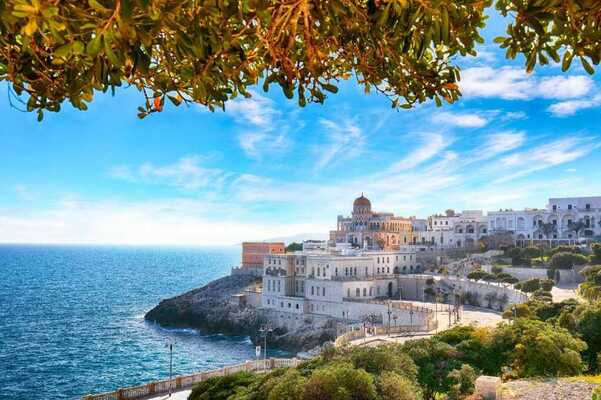
Santa Cesarea Terme
Santa Cesarea Terme represents one of the most popular Salento destinations for travelers seeking relaxation and well-being. This is thanks to the beneficial thermal waters that flow from the subsoil which are, in fact, a true elixir of beauty and health.
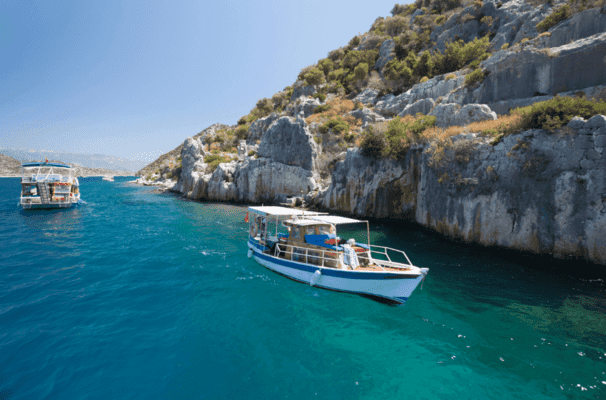
The 10 things to do in Salento
Are you planning your next holidays in Salento? Here are the 10 things to do during your stay in this peninsula jutting out into the Mediterranean.
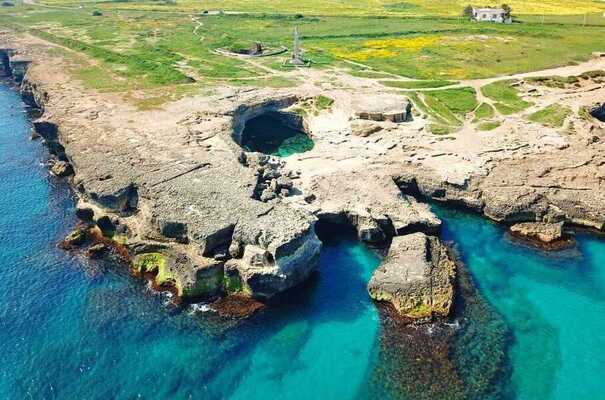
Salento Caves
Salento is a peninsula full of numerous and evocative caves scattered here and there, which can be visited mainly by sea. They all deserve to be visited for the colors or the particular shape of the rocks, creating a beautiful journey inside them, rich in history and nature. Even those who are passionate about trips, excursions and diving, here, can enjoy beautiful glimpses of rock full of niches and cliffs.
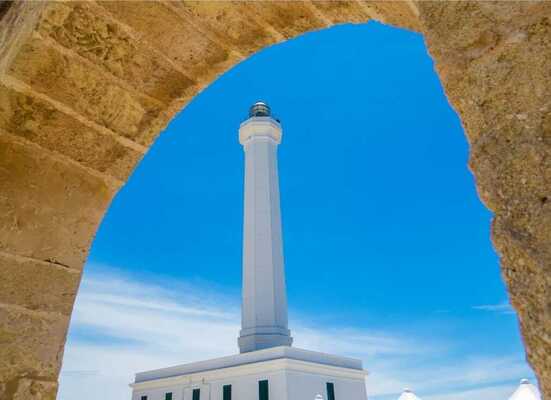
Santa Maria di Leuca: de finibus terrae
The place where the Adriatic Sea and the Ionian Sea meet: Santa Maria di Leuca, the tip of the heel of Puglia, is a unique and magical place waiting to be discovered. With its lighthouse, basilica, caves and nineteenth-century villas, this place will leave you speechless.
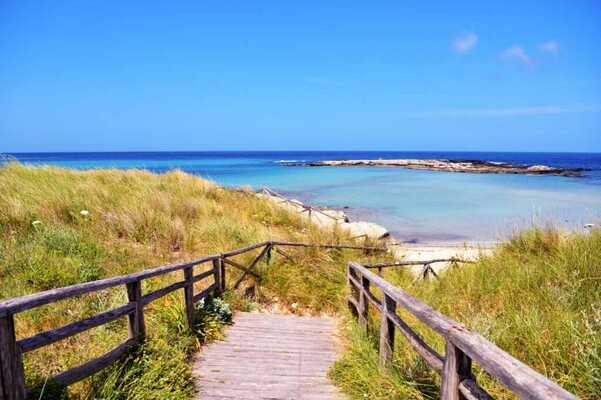
Porto Badisco: a paradise three steps from Otranto
Seaside location between Otranto, Santa Cesarea Terme and Castro, according to legend, linked to Virgil's narrative, Aeneas landed here together with his father and son.
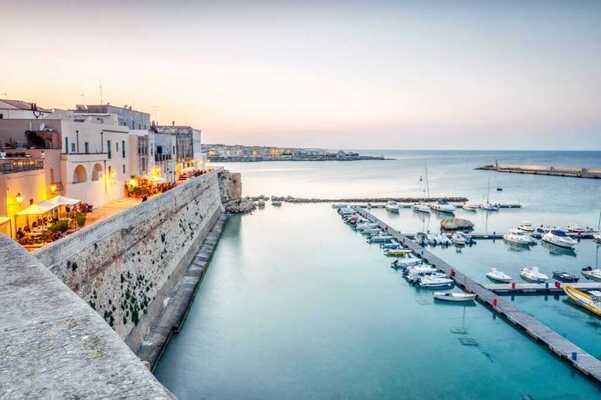
Otranto: the easternmost town in Italy
Otranto located on the Adriatic coast, is the easternmost municipality in Italy, where it is said there is the separation point between the Adriatic Sea and the Ionian Sea, almost a bridge between East and West.