




The Lecce baroque
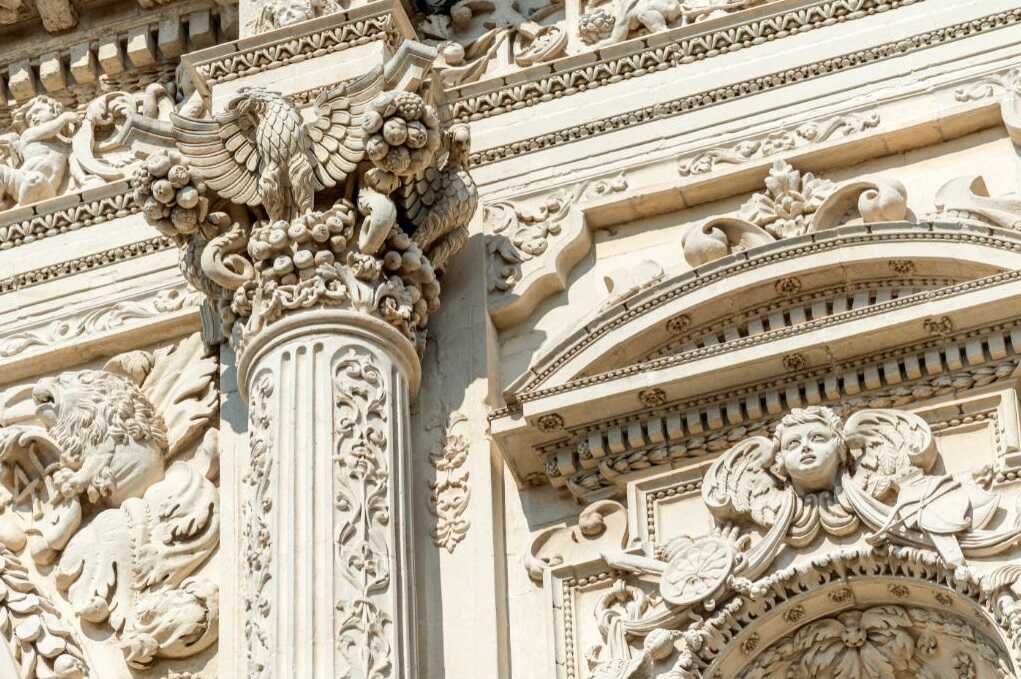
Lecce known as the “Florence of the South” is an open-air museum that enchants its visitors with the exuberance of its architectural features to be discovered little by little. A place to experience at any time of the day, when the sun in its path crosses the richness of its buildings and creates a wonderful play of embroidery and decorations. Walking through the streets of the Lecce baroque is a musical experience, with fast melodies and refined embellishments that suddenly appear in front of the many manifestations and testimonies of a past that is still alive. In fact, “old Lecce“, as its original inhabitants called it, seems like a city out of time, suspended between past and present in a very suggestive atmosphere, which has attracted cultured travelers from the most distant corners of Europe.

The house of Baroque
Visiting Lecce means getting lost among the wonders of the Baroque, letting yourself be enchanted by the churches and palaces embroidered in stone, the courtyards and secret gardens. Walking through the streets of the historic centre, it is possible to notice how Lecce is full of history and art: for example, there are numerous testimonies from the Roman era, such as the Amphitheater and the Roman theatre, but what characterizes it most is its peculiar style baroque, renamed “Lecce baroque” precisely because it was revisited in a completely new and original way.
This style, developed in the seventeenth century under Spanish domination, is distinguished by the sumptuous ornaments that enrich the facades of the buildings, exquisitely picturesque decorations created thanks to the use of Lecce stone. The most famous example of Lecce Baroque is the Basilica of Santa Croce, built between the 16th century and the end of the 17th century, renowned for its unmistakablerose window.
Alongside the majestic work is a rare example of sober baroque, the adjacent former Celestine convent and the Cathedral of the Assumption with the high bell tower which, together with the Seminary Palace and the Archbishop’s Palace, adorn the suggestive Piazza Duomo, a closed square and beating heart of Lecce, the religious hub of the city.
In short, Baroque art can be felt in every corner of the city, from noble homes to window frames, from chapels to decorated balconies.
Moving a little further, still in the historic center of Lecce, you will find various churches: there is the church of Santa Irene, of San Matteo, of Carmine and of San Giovanni Battista. We also find other splendid examples of Baroque in the Alcantarine church and in Palazzo Marrese.

Lecce Baroque outside Lecce
This style with elaborate shapes also infiltrates the urban fabric of other Salento centers, beyond the borders of Lecce. An example of Baroque can be found in the historic center of Gallipoli, where the Cathedral of Sant’Agata is located: the latter houses, in addition to a rich and elegant façade, also baroque style altars, among which the one built by Cosimo Fanzago. Also in Gallipoli you cannot avoid visiting the monastery of theDiscalced Carmelites, also in Baroque style.
Moving south on the Lecce – Maglie, after a few kilometers you come to the junction for Galatina. This city is among the major centers of Salento and houses several valuable baroque creations. The most important is the Mother Church, dedicated to the Apostles Piero and Paolo and built already in the fourteenth century.
Many other examples are:
- the Mother Church of Francavilla Fontana
- the church of San Domenico
- the Basilica of San Martino in Martina Franca
- the Spire of the Immaculate Conception in Nardò
- the church of the Crucifix in Galatone
If the cities we have talked about preserve much of the baroque of Terra d’Otranto, we must however underline that this form of architectural art also managed to establish itself in many of the other local centres, including the lower Salento up to Santa Maria di Leuca. Some testimonies that we cite are the parish church of Lequile, the church of the Immacolata of Cutrofiano, themother church of Castrì and that of Tricase, but there are too many examples to list them all. Even the smallest towns can often boast their own baroque monument or palace.
The Baroque style and its colors are one of the peculiarities of Salento and, therefore, it was requested that the Salento cities of Lecce and Gallipoli become a UNESCO World Heritage Site.
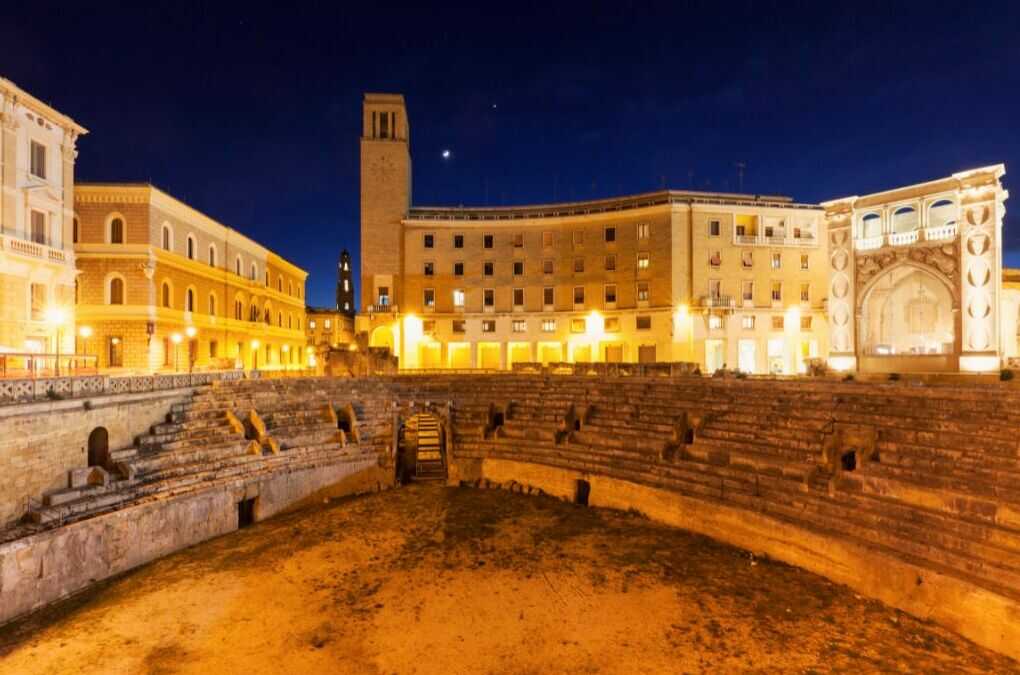
Roman Amphitheatre of Lecce
In the heart of the baroque city of Lecce, one of the most fascinating and significant monuments, which tells thousands of years of history, is the Roman Amphitheater. This extraordinary building, testimony to the glorious past of the ancient city of Lupiae, is one of the main tourist attractions of Lecce and an unmissable stop […]

Lecce coffee
Coffee in Italy is a real art, it represents the perfect break and an opportunity for socializing that we can hardly give up. In addition to the famous Neapolitan coffee, Lecce coffee also has its fame and anyone who visits Salento will almost certainly taste this tasty coffee with almond milk. In fact, in the […]
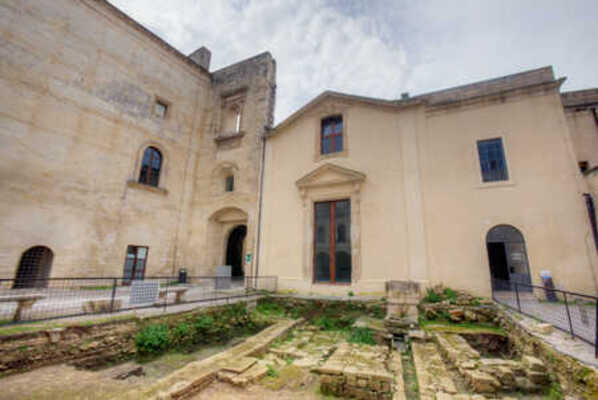
Carlo V Castle in Lecce
Among the many wonders that the city of Lecce hosts, we cannot forget the Carlo V Castle, which stands a short distance from the famous Piazza Sant'Oronzo, a must-visit place for anyone who finds themselves in the splendid baroque city.
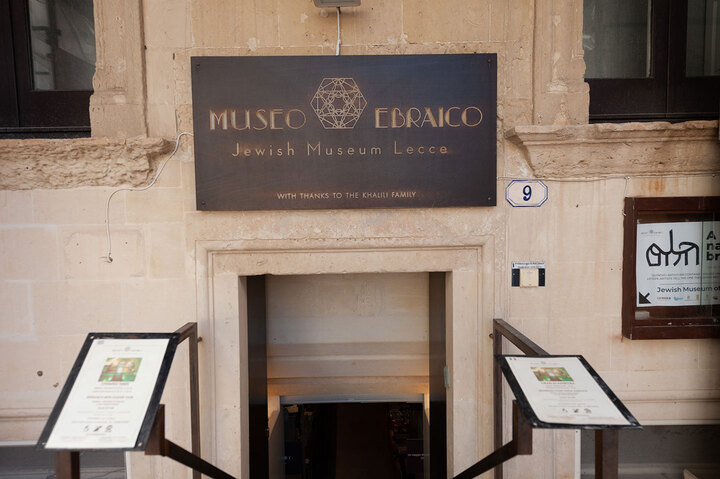
Museums of Lecce
Lecce, the capital of the province of the same name, is one of the most fascinating cities in Puglia, known for its extraordinary baroque beauty. In addition to the architectural wonders that adorn its squares and streets, Lecce hosts a vast array of museums that tell the story of the city and the region. Lecce’s […]
One-Day itinerary in Lecce
What to do in Lecce in one day? Among churches, abbeys, amphitheatres, squares and museums... it is possible to follow an itinerary that will give you a 360-degree experience of this wonderful Apulian city.

Lecce: to-do list
Lecce, located in the heart of Salento, is one of the most fascinating and historically rich cities in Puglia thanks to the important historical-artistic testimonies of its buildings and monuments. Not only that, Lecce also lends itself to the organization of numerous itineraries thanks to its privileged position, close to the beaches of the Salento […]