





The Dolmens in Salento
It is difficult to explain the overwhelming love for this extraordinary place, a land made of landscapes, colors and mysteries: Salento which has very ancient, even prehistoric, roots. We start precisely from the 4th millennium BC. with the birth of the Dolmens in the Salento area.
The latter, as well as the Menhirs, appear to be the oldest monuments existing on earth, probably dating back to the Neolithic.
In some the entrance has a door cut into several vertical plates, to prevent access to wild animals. There are several hypotheses regarding the function of the Dolmens. The most accepted is that they are funerary monuments, but according to other theories they performed the function of altars and places of worship.

Where are the Dolmens located in Salento?
Most of the Dolmens found are in Western Europe; specifically in Puglia there are 23.
- These are concentrated in the areas of Bisceglie, Corato, Giovinazzo, Trani, Ruvo di Puglia, Terlizzi and Molfetta, in the Brindisi area (Cisternino and Montalbano) and in the Taranto area.
- In Minervino di Lecce there is the “Li Scusi” dolmen, the first to be found in Puglia (in 1879), it is one of the most particular and representative of Salento and can be recognized in the regional classification due to its size. The name would allude to a hypothetical hiding function. The “Li Scusi dolmen cultural park” has been set up here: a project to enhance the territory which takes the form of a nature trail among dry stone walls, centuries-old olive trees and country paths.
- Giurdignano, defined as the “megalithic garden of Italy”, is a small village known nationally for the highest number of stone monuments. It houses 7 intact dolmens: from the so-called “Orfine” (about 1 meter high) to the “Peschio” (discovered in 1910). From the “Chiancuse” (of which only the roofing slab is visible) to the “Grassi” (two “twin” dolmens, unique in Italy). From the “Gravasce” to the “Stabile” (the latter is thought to be an altar). The Giurdignano Pro Loco organizes exclusive walking routes, even at night, by bicycle or by carriage.
- Also in the city of Melendugno, 2 dolmens were found: the “Placa” (made up of 7 blocks that support an irregular roof) and the “Gurgulante“.
- Finally Salve you will find the “Cosi” dolmen, discovered in 1968 by Giovanni and Paolo Cosi, inside which human remains, terracotta shards and a fragment of obsidian were found. At about 600 meters, there is the Argentina – Graziadei dolmen, which can boast a better state of conservation than the “Cosi”.
By virtue of this analysis, the hypothesis of a small Salento “Stonehenge” now lost forever becomes much more real. A historical and cultural resource that could be an opportunity for cultural development and visibility. In light of this, it is absolutely worth enjoying the evocative journey among the “stones” of prehistory.
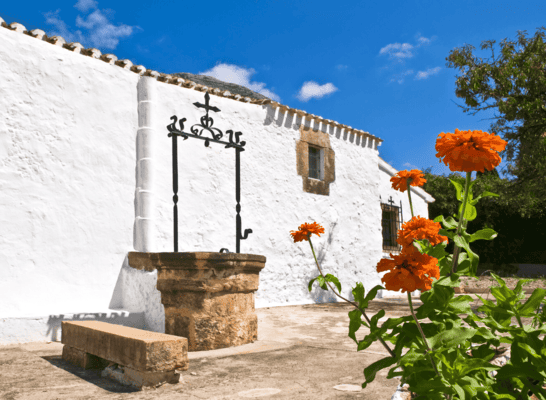
Courtyard houses in Salento
During your walks through the historic centers of Salento, you may come across houses with a particular architectural shape. The phenomenon of courtyard houses, born in 1500 in Salento, favored, in past times, the social cohesion of families thanks to its structural characteristics. The courtyard house is common throughout the Mediterranean area also for common […]
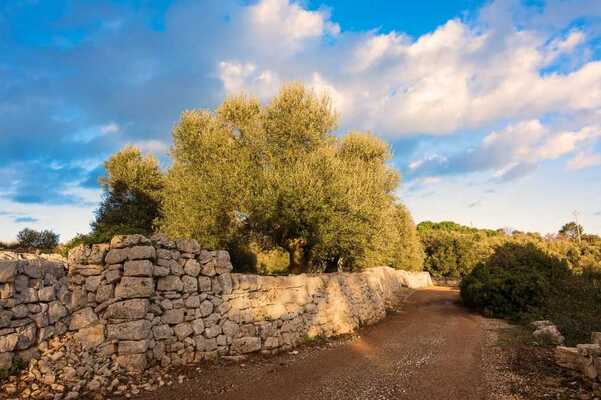
Dry stone walls in Puglia
Among the many peculiarities that characterize the Salento landscape and Puglia in general, there are undoubtedly the dry stone walls. These walls give all visitors one of the most authentic faces of Salento such that they immediately understand where they are. The creators of the "dry stone walls", who handed down this art form through the centuries, were certainly the descendants of the Messapians and the Neoliths.
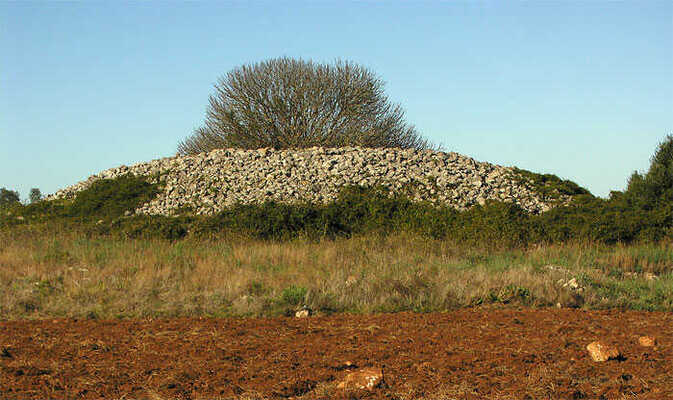
The “Specchie” in Puglia
A living testimony of prehistory in Puglia are the "Specchie" buildings similar to towers and consist of artifacts of very ancient origins made dry from piles of limestone. It is not possible to give these constructions a precise historical location: according to some scholars, in fact, their appearance dates back to the Neolithic, while, for others, they date back to the times of the Messapians.
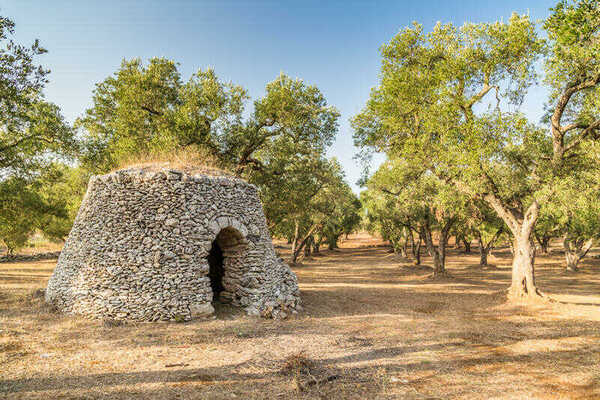
The “Pajare” in Salento
The Pajare also called "caseddhi", but also "pagghiari" or "furni" are particular typical buildings present in Salento and are considered typically rural homes and built with the dry wall technique. Furthermore, they respect the standards of green building because the use of natural materials such as stone does not affect the environment, becoming a true engineering marvel.
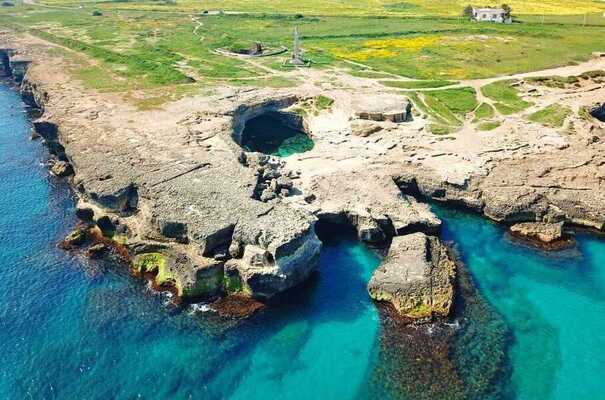
Salento Caves
Salento is a peninsula full of numerous and evocative caves scattered here and there, which can be visited mainly by sea. They all deserve to be visited for the colors or the particular shape of the rocks, creating a beautiful journey inside them, rich in history and nature. Even those who are passionate about trips, excursions and diving, here, can enjoy beautiful glimpses of rock full of niches and cliffs.
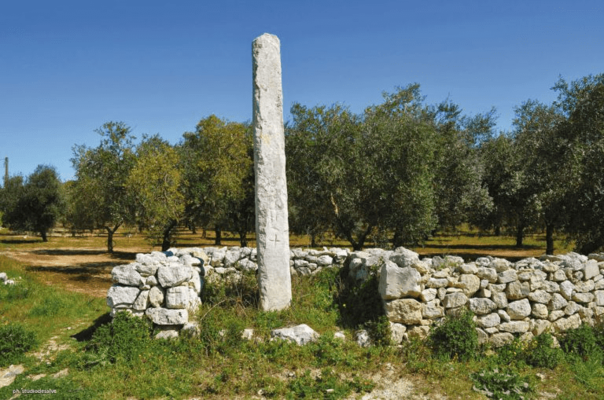
The Menhirs in Salento
Silent witnesses of the first expressions of human feeling, of a past that did not yet know the Messapic civilization, are the Menhirs scattered throughout Salento, whose origin and function remain shrouded in an aura of mystery. Erected starting from the Neolithic, the Menhir is a type of megalithic monument consisting of a monolithic column, […]