





Monteruga: the ghost town in the heart of Salento
Until you see it, you don’t believe such a place could exist. An enchanted, magical place, full of stories and mysteries, which revolve around what it once was, a private property largely unattended and left to rot, a chest broken into and abandoned to its fate, a heritage of humanity that of humanity it retains only the traces yellowed by time. Here, in the countryside of Veglie and at the crossroads between the four fiefdoms of Nardò, Avetrana, San Pancrazio Salentino and Salice Salentino, on the edge of a hill overlooking the sea of Torre Lapillo, in the heart of the Arneo, stands Monteruga, now reported only from rusty road signs, the ghost town in the heart of Salento uninhabited since the 1980s.

History of Monteruga
All the history, experience, peculiarities of Salento and its people seem to be represented by this place.
- It was born in the fascist era, when farms and agricultural companies flourished throughout Salento which were supposed to lead to the autonomy of the town.
- Hectares of uncultivated land which since the 1950s have been made available by farmers willing to move here with their family. The village has older origins, rising around what was a fortified farm, it took on its current appearance in the fascist era.
- What was just a farm, under the management of the S.E.B.I. electricity company. (Società Elettrica per Bonifiche e Irrigazioni, which later became ENEL) became a real town, which permanently had 800 inhabitants, divided into 100/150 families; it experienced its splendor in the 1950s, with the cultivation of tobacco and the production of wine, becoming above all a destination for people, in particular farmers from the surrounding areas, who moved here in search of work and fortune.
- A self-sufficient community was created, which in a short time due to economic problems that affected the company that owned the town, was sold to private individuals and from here its decline began: the farm was privatized, the village emptied and the inhabitants they moved to nearby cities.
Local products
In Monteruga tobacco, oil and wine were produced, and the ruins bear witness to this: a wine factory, on whose walls there was a fascist slogan, useful, it was said, to encourage workers to work: “He who drinks wine lives longer than a doctor who forbids it.” Walking through the streets of this abandoned town, you can see the church of Sant’Antonio Abate (patron saint of the place), the bowling green, the farmers’ houses, the barracks, the garages, the administrative offices, the school, the oil mill , the tobacco factory and the other agricultural products grown in the same land, by the farmers and settlers who reached this place from all the Salento areas, even from Capo di Leuca.

Traditions of the Monteruga town
But Monteruga wasn’t just work. A large family, where every moment of life was shared. In the summer, children from the summer camps also arrived to bring joy and happiness, there were large outdoor parties, we put on make-up and went for walks.
The saints were celebrated, as was appropriate. Sant’Antonio Abate was the patron saint of Monteruga, and every year, on January 17, a large procession passed through the village. In the memories of those who lived that place, the beauty of that day seems unforgettable, especially for those who were children at the time and received a leather ball or a doll as a gift for the occasion.
Also indelible are the memories linked to the annual procession in honor of Corpus Domini, when the women, as a sign of devotion, hung their trousseau on wires in the street, laboriously embroidered in the few hours of rest. They were beautiful moments, in which social and role differences were canceled out, and we were all together: settlers, farmers, administrators. Love was born in Monteruga, people got married, children were raised, but they didn’t die. Funerals were not celebrated here, as if only the triumph of life should prevail.
The town houses

Each family had its own house, all but one with a shared outdoor bathroom. The settlers’ houses, a bedroom and the kitchen, were arranged in a row and followed each other along the three sides of the large portico that surrounded the main square, following the rule “one door, one family“. Far from these homes, the primary school teacher’s house, built in that place to guarantee what at the time was defined as “moral hygiene”.
Monteruga today
Today, Monteruga is one of the most famous Ghost Towns in Italy. It is no longer that town full of life and populated by dynamic and industrious people, but presents itself as a deserted and abandoned place. Its buildings are still standing but they appear gloomy and full of nostalgia for what once was.
Despite the external signs that delimit private property, and the disturbing and desolate scenario that presents itself, many curious people still venture into this forgotten corner and piece of Salento in the land of Arneo, to explore this “glimpse of the past“, which continues to live, despite its sad history, and to show its most peculiar characteristics to all those who practice and love the so-called “abandonment tourism“, or the pleasure that can be felt by visiting all those ghost places that dot our territory.
The atmosphere of the abandoned square recalls the many films with apocalyptic scenarios. It seems that the town was abandoned from one moment to the next and that nature is taking over its spaces inexorably.
However, the beauty of the village has never ceased to enchant visitors and if Monteruga has had to deal with depopulation and the loss of the vitality offered by its inhabitants, today it appears permeated by a ghostly and nostalgic charm.


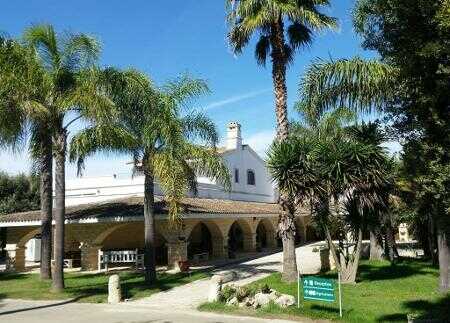
Agriturismo Torrevecchia
Salento has some of the most beautiful farms, very ancient and immersed in the silence of the countryside, which have been transformed into organic production companies, surrounded by olive trees. Among these, the Agriturismo Torrevecchia is an example. Their charm is unquestionable, not only beautiful beaches and sea, but also walks among the olive trees […]
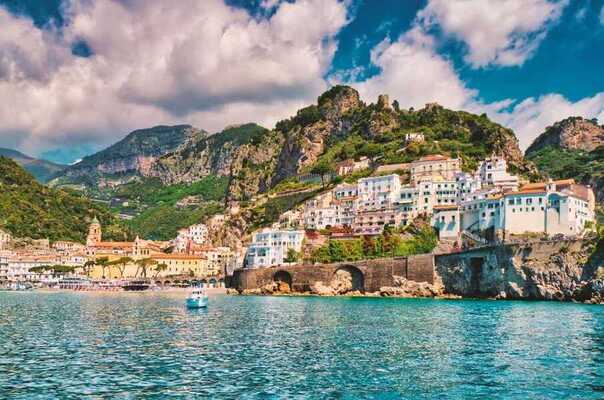
What to see near Salento: the beauties of Southern Italy
Those who live in Salento are already very lucky because they have beautiful places within reach where they can go on excursions, trips to the seaside, explore the historic centers or have fun during the summer nightlife. However, there is no shortage of those who also want to visit the beauties outside the Salento area, starting from the closest ones such as the cities, towns and villages of the Itria Valley.
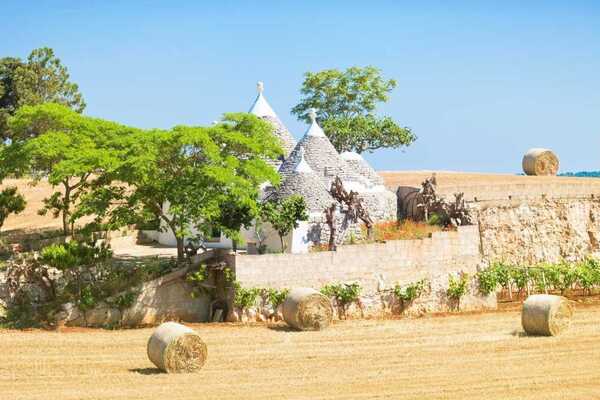
What to visit in Puglia in low season
Puglia is a region to be discovered not only in summer! Towns, villages and cities have so much to offer in all seasons, including unmissable events and relaxing stays in luxurious farms.
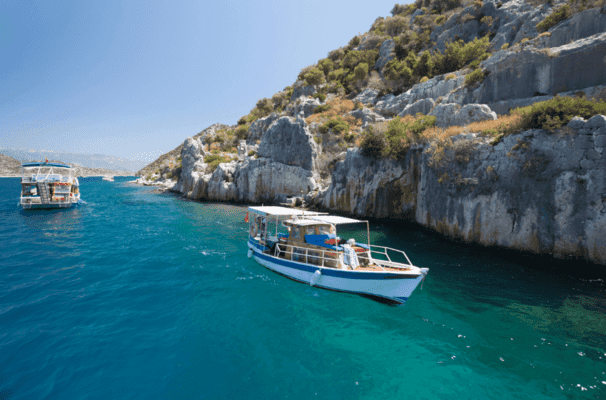
The 10 things to do in Salento
Are you planning your next holidays in Salento? Here are the 10 things to do during your stay in this peninsula jutting out into the Mediterranean.
When to go to Salento
What is the best time to go to Salento? Whether you are a lover of the sea, history, cuisine, you will not be disappointed. The Salento area boasts a very broad tourist offer that manages to satisfy all types of tourism.
Vincent Maria Brunetti – Vincent City
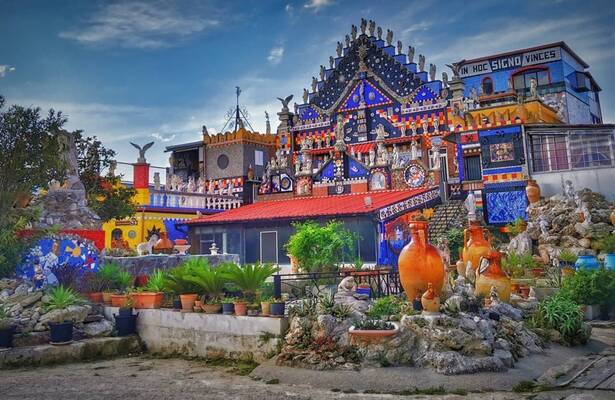
What I would like to tell you would seem like a fairy tale that begins with: “Once upon a time.” But, in reality, this fantastic place really exists and the protagonist is an artist who lives in Guagnano, 20km from Lecce. He can be seen in the distance, hidden among vineyards and olive trees, a […]